

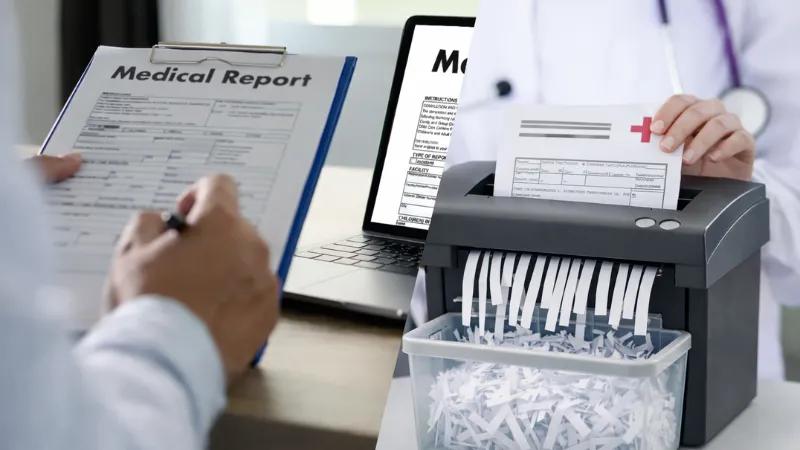
Managing medical records the right way sets the stage for accurate diagnoses, smoother treatments, and better outcomes for patients. When systems work as they should, the right information reaches the right people at the right time. But when things fall apart, the impact is serious, medical mistakes, compliance issues, financial losses, and a breakdown of patient trust that’s incredibly hard to fix.
Healthcare technology will keep changing. Regulations will continue to evolve. Security risks will only get more complex. But the basics don’t change. Patient privacy has to be protected. Records need to be easy to access when they’re needed. Everything must stay organized from start to finish, including how records are handled at the very end of their lifecycle.
That’s where professional shredding services matter. Securely destroying medical records isn’t just a compliance requirement, it’s a responsibility. Behind every file is a real person who trusted you with deeply personal information. Honor that trust, because in healthcare, shortcuts aren’t an option.
What We're Really Talking About Here
Medical records management is basically a system of rules and procedures that protect patient information from the moment it's created until it's properly destroyed. Think of it as a lifecycle, every single interaction with a patient's file needs a clear process, whether you're looking at it for a routine checkup, responding to a patient asking for their records, or sharing info with another doctor.
And we're talking about a massive amount of stuff here. Healthcare organizations deal with patient histories, test results, treatment plans, insurance information, billing records, and employee data. Each type of record has its own quirks and challenges.
HIPAA: The Game Changer
HIPAA didn’t just add a few rules to the healthcare system, it completely changed how patient privacy is viewed and protected. For the first time, there were clear, enforceable standards for safeguarding what’s known as Protected Health Information, or PHI.
So what does that actually mean in real life? Healthcare providers are required to keep patient information confidential, secure, and available when it’s needed most. They must identify potential risks, prevent unauthorized access, and make sure everyone, from doctors and nurses to front-desk staff, follows the same privacy standards.
What really stands out about HIPAA is that it gives power back to patients. You now have the right to access your own medical records, and your information can’t be shared without your consent. That transparency builds trust and allows patients to take an active role in their care.
And HIPAA takes enforcement seriously. Violations can lead to heavy fines and even criminal charges, which is why organizations invest heavily in training, systems, and secure record-handling practices.
The Biggest Problem Nobody Talks About
Want to know something shocking? More than half of all data security incidents happen because of employees who weren't trained properly. Not hackers. Not sophisticated cyber attacks. Just regular people making avoidable mistakes.
This is exactly why training can't be some boring one-hour session on someone's first day and then never mentioned again. It needs to be ongoing and actually useful. When your team understands that a careless moment could expose someone's cancer diagnosis or compromise their financial information, they treat their work differently.
Think about it, your team is only as strong as its weakest link. In healthcare, there's no room for that weak link.
Building a System That Actually Works.
Get Your Procedures in Writing
First things first: write everything down. HIPAA requires you to keep written policies for at least six years, but honestly, the real value goes way beyond compliance. When everything's documented, everyone follows the same process whether they've been there for two weeks or twenty years.
And listen, these can't just sit in a drawer gathering dust. As things change, new regulations, new technology, new team members, your procedures need to keep up. Review them regularly and update as needed.
Organize Like Your Life Depends On It
Whether you're dealing with paper files or digital records, organization is everything. You need a system that tracks every record from creation to destruction, making sure you keep things for the legally required time while still being able to find what you need instantly.
For digital files, use naming systems that make sense. Make everything searchable by patient name, ID number, date, procedure type, whatever you might need to search by. The faster you can find a specific record, the better you serve patients.
Many places are organized by last name and birthdate. The key is avoiding mix-ups, because grabbing the wrong file isn't just inconvenient, it's a potential privacy violation that could land you in serious trouble.
Let Technology Do the Heavy Lifting
Managing health records involves so many details that it's easy for things to slip through the cracks. That's where automation saves you. Instead of manually tracking when records need to be destroyed or remembering to run backups, let the system handle it.
A good centralized system can alert you when records are approaching their retention deadlines, automatically back everything up, and track who accessed what information and when. This frees your staff to focus on patients instead of paperwork.
Control Who Sees What
Not everyone needs access to everything. A receptionist scheduling appointments doesn't need to see detailed treatment notes. Someone handling billing needs insurance information but not clinical details.
For paper records, this means locked storage rooms that only authorized people can access. For digital records, it means strong passwords, encryption, and detailed logs of every access attempt. These controls are also critical when preparing files for secure shredding of medical records once they reach the end of their lifecycle.
How Long Do You Keep This Stuff?
Generally, to stay compliant with Medicare and Medicaid, you need to keep patient records for at least five years. Critical access hospitals need six. But many states require more.
California says to keep records for at least 10 years. Texas requires seven years for most records, but you can't destroy pediatric records until the patient turns 21. New York keeps pediatric records until age 19, adult records for six years.
Some specialized records need even longer. If you've got workplace hazard exposure records, OSHA might require you to keep those for 30 years.
The safest bet? Keep electronic records for at least six years minimum, but look up your specific state requirements, and when in doubt, keep things longer rather than shorter.
Destroying Records the Right Way
For paper records, you need to shred, burn, pulverize, or pulp them. The goal is making it impossible for anyone to piece things back together. This is where professional paper shredding services become essential, especially for organizations handling large volumes of sensitive data.
Digital records are trickier. Just deleting files or formatting a hard drive doesn't cut it,there are tools that can recover "deleted" data. You need specialized software that actually wipes data permanently, or magnetic methods that eliminate everything from hard drives.
For really sensitive information, some organizations physically shred the hard drives themselves. You can't recover data from a pile of metal shards.
Going Digital
Here's an interesting stat: 89% of physicians use electronic medical records, but only 72% use certified systems according to the CDC. That gap matters because uncertified systems might lack critical security features.
When done right, digital records are incredibly powerful. They save physical space, update instantly across networks, make backups easier, and allow instant access during emergencies.
But going digital also creates new risks. USB drives get lost. Cloud settings get misconfigured. That’s why HIPAA-compliant systems with encryption, audit trails, and automated backups are non-negotiable.
Stay on Top of Things
Check both digital systems and physical workflows. Are files being left out overnight? Are employees following access rules? Are there unusual access patterns? Is your security software up to date?
Designate someone specifically responsible for compliance and security. If something ever does go wrong, having documented procedures and audit trails can significantly reduce penalties.
Your Action Plan
Every healthcare organization needs a comprehensive plan that outlines how records are handled throughout their entire lifecycle.
This plan should explain how records are used, who can access them, where they're stored, and when and how they're destroyed. Since most facilities operate with both paper and digital records, separate protocols are essential.
Many organizations also rely on professional vendors for secure storage, scanning, and certified document shredding services, ensuring compliance while freeing up valuable internal resources.
Because Patient Trust Doesn’t End Until Secure Shredding Services Do
Managing medical records properly creates the foundation for accurate diagnoses, efficient treatment, and better patient outcomes. Getting it wrong leads to medical errors, compliance violations, financial penalties, and broken trust.
Technology will continue to evolve. Regulations will change. Threats will grow more complex. But the core principles remain the same: protect patient privacy, ensure access when needed, stay organized, and securely close the loop with compliant document shredding services.
Behind every medical record is a real person who trusted you with their most sensitive information. Honor that trust. In healthcare, the stakes are literally life and death, and there’s no room for shortcuts.