

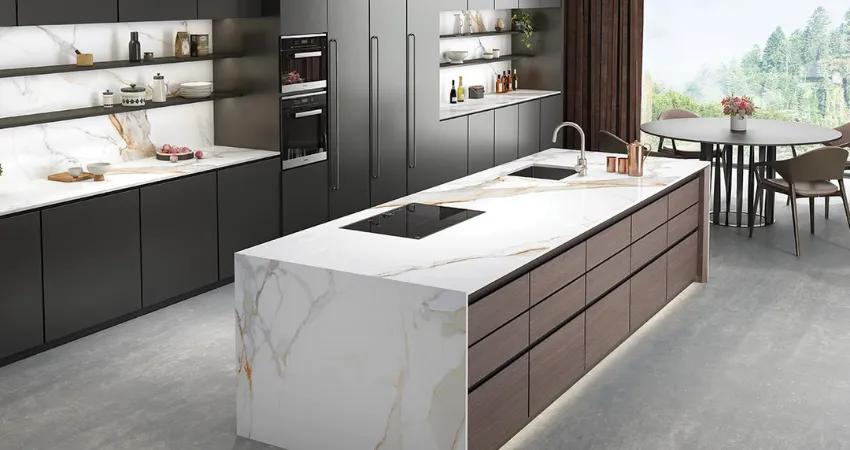
Small rooms tend to need more planning, since every design choice has a visual impact. The right tile selection can make small interiors feel lighter, neater, and even more spacious without changing the actual layout.
That is why practical tile ideas for small spaces often focus on color, size, finish, and layout. These surface choices influence how open a room feels and how easily light moves across it.
Many homeowners also consider porcelain slab tiles because their larger format creates fewer visible joints, which helps the limited layout look more continuous and visually balanced.
The objective is not just to select attractive tiles. It is selecting surfaces that make a small room feel comfortable, functional, and visually open during everyday use.
Why Tile Choice Matters More in Small Rooms
In bigger rooms, furniture and open space often soften design errors. In smaller spaces, though, surface choices stand out more because the eye is drawn instantly to the floor and walls.
Tiles add depth, brightness, and visual movement to a room. A complex pattern can overwhelm a room, while a simpler design usually keeps it visually calm. This is why small space tile design usually focuses on clarity rather than decoration. The less visual interruption the surface creates, the more open the room tends to feel.
A practical starting point is deciding what the room needs most:
more brightness
more depth
easier maintenance
stronger visual continuity
That decision usually makes tile selection much easier.
Why Light Colors Work Well in Small Spaces
While it is a small space, one of the most practical ways to maximize this area would be to use lighter tile shades. Lighter colors, such as white, beige, pale grey, and warm neutrals, will brighten your home by reflecting more light than darker hues. This helps the space feel brighter during the day, and artificial light is distributed more evenly in the evening.
This is why light-colored tiles are often preferred for bathrooms, compact kitchens, narrow corridors, and utility areas.
Lighter surfaces also soften visual edges, which helps walls and floors blend more naturally.
Gloss finishes reflect light more directly, whereas
Matte finishes give a softer look and take in light more evenly.
The room's natural daylight will also help determine which finish to use.
Why Large Tiles Often Suit Small Rooms Better
There is a common misconception that small rooms require small tiles, but this is not always true. In fact, large tiles for small areas often yield a cleaner finish because fewer grout lines are revealed. The more grout lines that divide the floor into smaller sections, the busier the room can be.
Larger tiles create broader, uninterrupted surfaces, allowing the eye to move more easily across the room. This is one reason large-format porcelain surfaces are often chosen for compact interiors.
A floor with fewer joints usually feels calmer, especially when the grout color closely matches the tile. This creates what designers often describe as a seamless tile design.
Tile Layout Can Change How a Room Feels
Tile size is important, but layout matters as much. Depending on how a tile is laid, a different visual effect can be achieved with the same tile.
Straight Layout looks simple and stable. Placing the tiles diagonally can also make the floor feel wider, as the eye follows different edges of each tile than when they are placed in parallel lines. In a narrow room, though, laying tiles lengthwise usually helps to elongate the room optically. In square spaces, diagonal plans create additional movement at times.
The best layout usually depends on where natural light enters and which direction the room already draws attention. This makes tile layout for a small area an important design decision rather than only an installation choice.
Vertical Tile Placement Can Add Height
When space is limited and height is restricted, the orientation of the tiles is important. Tall tiles should be used vertically to give the illusion of a taller room. Vertical layouts are common in bathrooms, the shower, and kitchen backsplashes.
That works particularly well when the tile patterns are simple, and the grout lines are clean. When the floor and wall tiles are in similar tones, it creates an even more cohesive feeling in the room.
Keep Patterns Controlled in Compact Interiors
While most patterns show off a bit of personality, in small spaces, they must be balanced. Active tiles across multiple surfaces will start to take over a room. A more considered approach would be to contain the pattern to a single field.
one wall
backsplash
shower section
niche area
You can keep the rest of the room simple. It allows the design to feel intentional without being too busy in the space. In tight quarters, not even subtly stone-like surfaces tend to perform as well as boldly contrasting prints.
Matching Floor and Wall Tones Helps Continuity
One of the easier tricks is to reduce the contrast between floors and walls. When tiles of the same color are used on walls and floors, the line where they meet blurs. This increases the room's size.
Slight variation still keeps depth. That's because high contrast in a very small space tends to make edges more visible.
Installation Quality Matters as Much as Tile Selection
And no matter how perfect the tiles are, they would lose their aesthetic effect if not installed properly. The result is influenced by factors such as alignment, joint spacing, edge finishes, and grout consistency.
And this in particular becomes critical when the rooms are smaller, where every detail remains visible. Many homeowners also consider whether they can handle it themselves or hire a professional, especially when it comes to surfaces and decorative wall applications.
In smaller spaces, install accuracy is even more critical, as minor visual errors become noticeable quickly.
Choosing Tiles That Stay Practical Over Time
Little rooms usually get a lot of action every day. Ease of maintenance also pertains to tile selection. As far as maintenance, porcelain tile is still a good choice because it is resistant to
Moisture
Scratches
Regular cleaning
Temperature variation
That makes it appropriate for bathrooms, kitchens, and utility spaces in which practical performance is as important as design. Durability becomes even more valuable when the same surface is expected to keep its appearance over many years.
Smart Tile Choices for Better Small Spaces
Choosing tiles for smaller rooms is especially important. Light colors, big tiles, minimal/gentle patterns, and the right layout can make a room feel much larger.
When good materials and proper installation come together, even a compact room can feel comfortable and easy to use every day. In many situations, collaborating with a skilled porcelain tiles company can help weigh options and select the best available option for the room.